Why accuracy matters more than ever in construction

Australia’s construction and infrastructure sectors are evolving at a pace not seen before; projects are larger, timelines tighter, and margin for error smaller. Engineering consultancies, civil contractors and government delivery teams rely on spatial data to inform decisions from feasibility through to handover. When that data is incomplete or inaccurate, rework spirals, delays multiply and budgets blow out.

This is where modern land surveying technology, particularly drone surveying for constructionaerial mapping services, and 3D site modelling is fundamentally reshaping the way project teams plan, build and manage assets.

At Landair Surveys, we’ve seen firsthand how advanced geospatial workflows underpin better decision-making across engineering, design and construction. With 50 years of experience and a data-first philosophy, precision is not an aspiration, it’s a requirement. 

How drone mapping is changing on-site operations

The rise of drones in construction isn’t a trend, it’s a transformation. Drone-based surveying provides fast, safe and accurate capture of spatial data across complex, active or hard-to-access sites.

1. Faster, safer data capture

Drones dramatically reduce time on site. Instead of days of manual field capture, drone flights generate full-site visualisations and point clouds in hours. This is especially valuable on large infrastructure corridors, busy civil sites and constrained urban environments where traditional access is restricted.

2. High-resolution aerial mapping for real-time insight

Through aerial mapping services, teams receive orthophotography and surface data that support planning, progress tracking and volume calculations. For engineering and construction teams, this means:

  • Clear visibility of construction staging
  • Accurate monitoring of cut/fill activities
  • Better coordination of subcontractors
  • Reduced time spent validating site conditions

3. Improved safety and compliance

Drone mapping reduces the need for work at height, access into hazardous zones and unnecessary site travel. This aligns with modern safety management frameworks where data, not physical access drives verification.

These efficiencies matter. They translate into reduced risk, lower cost and greater clarity on fast-moving projects.

3D surveying: The backbone of modern engineering & construction

While drone mapping provides rapid context, 3D laser scanning delivers the millimetre accuracy required for design, clash detection and project coordination. Construction partners increasingly expect survey deliverables that integrate seamlessly with digital engineering workflows.

Scot's Church point cloud

1. High-accuracy point clouds and digital twins

Landair uses both static and mobile scanning systems to generate detailed point clouds for structures, civil assets and built environments. These become the single source of truth for:

  • Digital terrain modelling
  • 3D site modelling
  • Existing conditions capture
  • Clash analysis and design refinement
  • As-built validation

The result: engineering models that truly reflect site reality, reducing rework and improving decision-making.

Bendigo Town Hall

2. Eliminating design risk through precision

Across government infrastructure, road upgrades, utilities, industrial redevelopments and complex civil works, accuracy is everything. Clients repeatedly highlight accuracy and quality control as the most important selection criteria for spatial providers. The recurring industry pain point? Data delivered out of spec, checked poorly or processed offshore, leading to months of rework.

Landair’s value is built on the opposite approach: every dataset is captured, processed and validated locally by an experienced team with rigorous internal QA checks. This reduces downtime and supports engineering teams who can’t afford uncertainty.

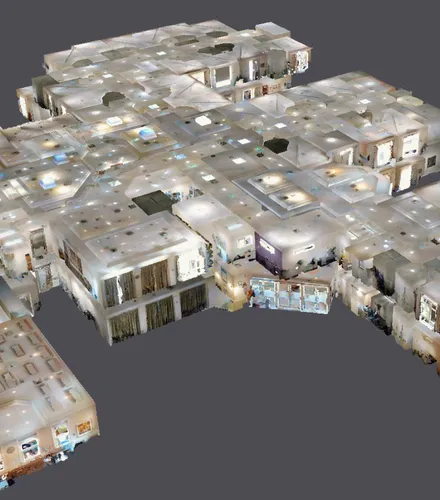
Hedley Sutton Aged Care 3D scan

3. Seamless CAD and BIM integration

As digital engineering matures, survey data must be usable—not just technically correct. We provide clean, structured datasets aligned to software used by civil engineers, project managers and designers:

  • AutoCAD-ready drawings
  • Revit/BIM-ready models
  • Structured point clouds
  • Contour and topographic layers

This supports faster modelling, easier collaboration and fewer manual edits for project teams.

Topographic, contour and terrain modelling for smarter construction planning

Effective planning depends on a clear understanding of the land. Topographic and contour mapping, combined with digital terrain modelling, helps project teams identify constraints early, before they become costly downstream challenges.

Applications across civil engineering surveying:

  • Earthworks planning and cut/fill optimisation
  • Drainage and stormwater design
  • Utility coordination
  • Site feasibility assessments
  • Road and rail alignments

With accurate terrain modelling, engineers reduce risk, anticipate design conflicts and make informed decisions from day one.

Why geospatial data is becoming non-negotiable in major infrastructure projects

Across transport, utilities, water authorities and state government agencies, the use of geospatial data in constructionhas shifted from a “nice to have” to project-critical infrastructure. With large, multi-discipline projects increasingly relying on federated models, the demand for high fidelity spatial data is rising.

The biggest drivers behind the shift:

1. Complexity

Major projects involve dozens of consultants and contractors working concurrently. Precise survey data ensures alignment between disciplines.

2. Risk reduction

Engineering teams need confidence that measurement inputs are correct. Survey inaccuracy causes rework, disputes and contractual delays.

3. Sustainability and lifecycle value

Better data at the start of the project improves the long-term operation and maintenance of assets, reducing lifecycle costs.

4. Demand for digital deliverables

Digital twins, BIM coordination and long-term spatial data management now form part of most government and Tier 1 engineering scopes.

Drone mapping + 3D surveying: A hybrid workflow for better decisions

The most impactful geospatial solutions combine aerial perspective with ground-level precision. Landair’s hybrid workflow uses:

  • Drone mapping for broad-area context
  • 3D laser scanning for millimetre precision
  • CAD/BIM-ready outputs
  • High-quality photogrammetry
  • Detailed site data capture and analysis

This approach delivers a complete understanding of the project environment — essential for engineers managing live sites, tight deadlines and high-risk assets.

Why engineering and construction partners choose Landair

From our brand values to the way our teams deliver projects, Landair’s entire approach centres on precision, responsiveness and long-term partnership

Quality data that reduces rework

Clients consistently highlight our higher accuracy and rigorous checking as a point of difference. 

Fast mobilisation and reliable turnaround

Time is value, especially in construction. We deploy quickly and communicate clearly throughout the project.

Experienced in complex, high-stakes environments

From government corridors to industrial facilities, heritage structures and high-traffic sites, we’ve seen and solved, almost every surveying challenge.

Aerial and terrestrial expertise in one team

With aircraft, drones, mobile scanners and static scanners, we recommend the right technology based on site conditions and required outputs, not the other way around.

Real impact: How better spatial data improves outcomes

Improved design accuracy

Models align perfectly with existing conditions, reducing redesign hours.

Faster construction workflows

Project teams resolve issues earlier using precise digital insight.

Lower cost of rework

Accurate data at the start prevents expensive downstream mistakes.

Stronger stakeholder confidence

Developers, engineers and government authorities gain assurance that the project is grounded in fact, not assumptions.

The future of construction depends on better data

As Australia pushes ahead with ambitious infrastructure, renewable energy projects, transport upgrades and complex urban redevelopment, the need for reliable land surveying technology will only accelerate.

Drone mapping, 3D laser scanning, digital terrain modelling and advanced geospatial analysis are now central to achieving accuracy, safety and sustainability across the entire project lifecycle.

And as the sector evolves, Landair remains committed to “precision data powering progress”—supporting engineers, construction partners and government clients with data they can trust. 

Ready to strengthen your next project with accurate, construction-ready spatial data?

Let’s get started.